Introduction: The Heartbeat of Azeroth
Dungeons have always been a central aspect of World of Warcraft, providing a mix of story, lore, and challenging gameplay. Over the years, WoW’s dungeon design has evolved significantly, reflecting changes in player expectations, gameplay mechanics, and storytelling. From the early days of simple, linear dungeons to the complex, multi-phase encounters of today, the evolution of dungeon design in WoW has been both fascinating and transformative. In this article, we’ll take a deep dive into how dungeons in WoW have changed over the years, from their origins to their modern-day forms.
The Early Days: Simple Yet Effective Dungeons
When World of Warcraft first launched in 2004, dungeons were relatively straightforward. Early dungeon designs focused on offering a series of linear paths with multiple bosses and loot rewards. These early dungeons, such as the Deadmines and Shadowfang Keep, were simple in structure, offering players a chance to experience storylines while progressing through basic combat encounters.
Key Features of Early Dungeons
- Linear Design – Early dungeons followed a more basic design, where players would move through a series of rooms, each containing trash mobs and a boss at the end.
- Limited Mechanics – The encounter mechanics were simple, usually revolving around tank-and-spank strategies or dealing with one or two unique mechanics per boss.
- Focus on Story – Many of the early dungeons were designed to introduce players to the lore of Azeroth, often featuring villains and storylines that were integral to the game’s world.
The Burning Crusade: The Rise of Complex Encounters
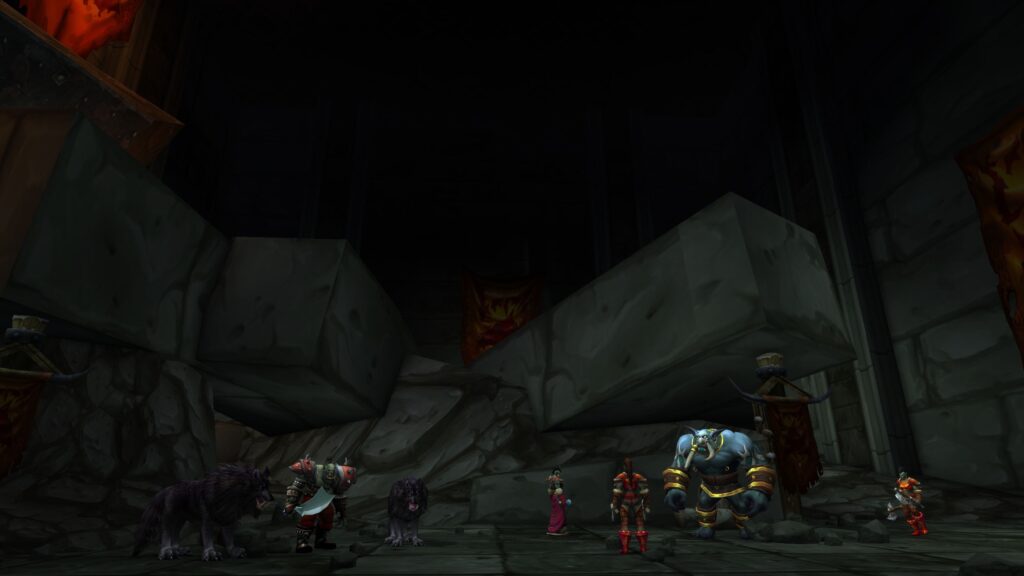
With the release of The Burning Crusade expansion in 2007, dungeons began to grow in complexity. The introduction of the 10- and 25-player raid dungeons, as well as more intricate dungeon encounters, pushed the boundaries of dungeon design. Raids like Karazhan set the stage for the future, offering players a more immersive experience with intricate encounters and multiple phases.
Complexity and Innovation
- Multi-Phase Bosses – Karazhan’s Prince Malchezaar and other bosses introduced the concept of multi-phase encounters, where players had to adapt to different mechanics throughout the fight.
- Environmental Challenges – Dungeons like Serpentshrine Cavern began to integrate environmental mechanics, such as damaging areas or moving platforms, requiring players to be more aware of their surroundings.
- Themed Dungeons – Dungeons like Black Temple and Zul’Aman embraced unique themes that added to the storytelling experience, taking players through iconic locations while weaving deep lore into the gameplay.
Wrath of the Lich King: The Era of Immersive and Story-Driven Dungeons

Wrath of the Lich King introduced some of the most memorable dungeons in WoW history, with encounters like the Lich King himself becoming iconic. The expansion focused on integrating storylines more directly into the dungeons, using the dungeon settings to further the overall narrative of the expansion. It also introduced Dungeon Finder, which made it easier for players to find groups and experience dungeons without relying on in-game guilds.
Key Innovations in Dungeon Design
- Storytelling Integration – Dungeons such as Utgarde Keep and Icecrown Citadel used their environments and dialogue to build the narrative of the expansion, immersing players in the lore.
- Challenging Mechanics – Dungeons became more complex, with encounters like the heroic version of The Culling of Stratholme, which had a timed element and required precise execution from the players.
- The Dungeon Finder Tool – Introduced in this expansion, Dungeon Finder allowed players to queue up for dungeons across all levels, making it easier to experience content without relying on a guild.
Modern WoW: Dynamic Dungeons and Mythic+ Dungeons
With the launch of the Legion expansion, WoW introduced Mythic+ dungeons, forever changing the way players engage with dungeons. This dynamic scaling system brought replayability and a higher difficulty curve, challenging players to push their limits week after week. Mythic+ dungeons offered players the chance to increase the difficulty of dungeons with different affixes, adding variety and unpredictability to the experience. Dungeons also became more immersive, with larger environments and more complex storylines intertwined with the gameplay.
The Impact of Mythic+ Dungeons
- Dynamic Scaling – Mythic+ dungeons introduced the concept of scaling difficulty, allowing players to tackle the same dungeons repeatedly with increasingly challenging mechanics and different affixes.
- Replayability – With the introduction of keystones and difficulty scaling, Mythic+ dungeons offered an endless amount of replayability, encouraging players to test their skill and earn progressively better rewards.
- Competitive and Rewarding – Mythic+ dungeons also added a competitive aspect to the endgame, with leaderboards tracking the fastest dungeon completions, motivating players to improve and strive for perfection.
Conclusion: The Ongoing Evolution of WoW’s Dungeon Design

From the simple, linear dungeons of the early days to the complex, story-driven dungeons of today, WoW’s dungeon design has undergone a remarkable transformation. With the advent of Mythic+ dungeons, the addition of competitive elements, and the constant evolution of storytelling and mechanics, WoW’s dungeons remain one of the game’s most engaging features. As the game continues to evolve, one thing is clear: dungeons will always be at the heart of WoW’s experience, offering new challenges and stories for players to explore.
Home